Choosing the best wine glasses for your business is a practical decision, not just a matter of style. The right shape can support a wine’s aroma and flavor, while sturdy construction helps glasses withstand busy service. But no single glass suits every venue. A neighborhood restaurant, tasting room, and hotel bar face different budgets, storage limits, and guest expectations. Small details matter. Consider the wines you serve, how your team washes and handles glassware, and whether replacement pieces are easy to source. A beautiful glass that chips quickly may cost more in the long run. Not just appearance.
Wine-glass designer Georg J. Riedel is often quoted as saying, “The wine glass is the instrument with which you can taste the quality of the wine.” That idea offers a useful starting point for businesses choosing Glass Wine products: assess how each design performs with your actual menu and service routine. Compare bowl shape, rim, weight, clarity, durability, and price per use. Ask staff to handle samples during a real shift; a glass that feels elegant in a catalog can feel awkward on a crowded tray. Then test a small quantity before committing to a large order. That takes testing. There is no perfect choice, and specifications alone can miss what happens in daily service. A thoughtful selection balances guest experience with practical costs—and leaves room to revise the choice when real feedback arrives.
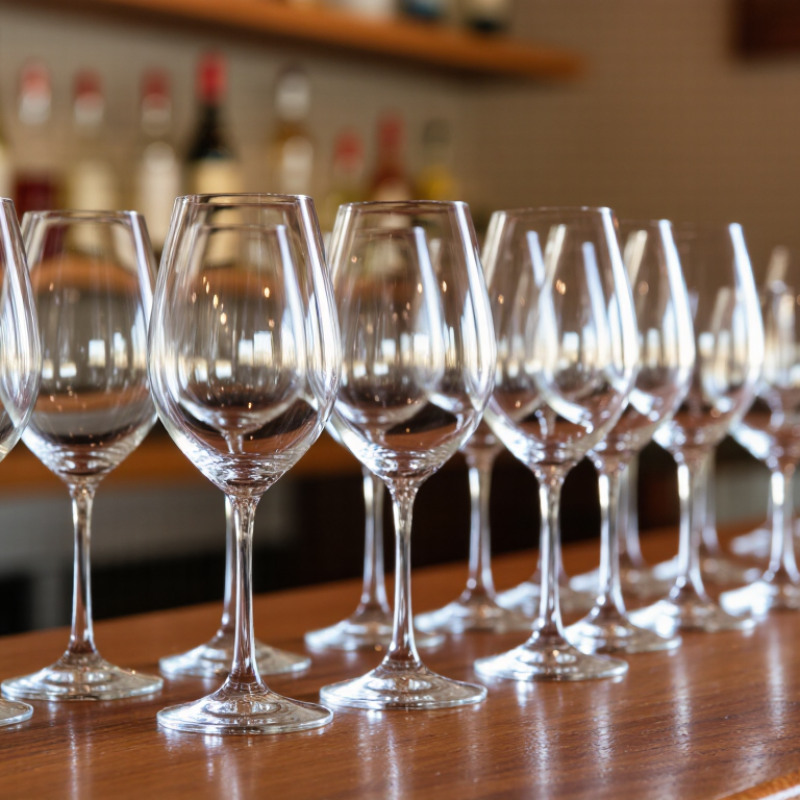
Identify Your Business’s Service Style and Customer Needs
A wine glass should fit the way your business serves, not just the wine list. A tasting room may need small, clear bowls that show color and support measured pours. A busy bistro may benefit from sturdy stems, stable bases, and shapes that are easy to wash and store. For a formal dining room, a larger bowl can make table service feel more considered. Small details matter.
The National Restaurant Association’s 2024 State of the Restaurant Industry report projected $1.1 trillion in U.S. restaurant sales and 15.7 million jobs. Those figures describe a crowded, labor-intensive industry, where glassware must support both hospitality and efficient service. Watch how guests actually use each glass: do they swirl wine, hold the bowl, or leave little room between settings? These observations can reveal more than a catalog description. Still, one glass rarely suits every occasion.
Choose samples, then test them during a real shift. Check whether servers can carry them safely, whether dish racks fit their shape, and whether guests can comfortably hold them. A delicate rim may feel elegant, but it can be a poor match for high-volume service. I would revisit that choice after a week; breakage and staff feedback can challenge an appealing first impression.
Match Glass Shapes to the Wines You Serve
Match each glass shape to the wines your guests actually order. A narrow bowl helps crisp white wines stay cool longer and directs their aromas toward the nose. The smaller opening also reduces spills during busy service. Sparkling wines often work well in tulip-shaped glasses, which leave room for bubbles while concentrating aroma. Flutes look neat on a tray, but their narrow shape can make delicate scents harder to notice.
For fuller reds, a wider bowl gives guests room to swirl and release aromas. It can also make the wine easier to assess before sipping. But oversized glasses take up shelf space and need careful handling. In a restaurant with limited storage, that trade-off matters. I have seen teams choose impressive-looking stemware, then regret the extra washing and breakage. Recheck your choices against your menu, storage racks, and service pace.
Tips: Start with three useful categories: light whites, sparkling wines, and fuller reds. Test one glass of each during a real shift. Notice whether staff can carry them steadily, guests can smell the wine comfortably, and the glasses fit your shelves. If a variety sells rarely, a versatile glass may be more practical than a dedicated shape.
Compare Materials, Durability, and Care Requirements
Material affects both the feel of a wine glass and the work required to keep it in service. Standard soda-lime glass is usually affordable and sturdy enough for busy dining rooms, though it can feel heavier in the hand. Lead-free crystal is often thinner and clearer, which helps present wine attractively. Its delicate rim may chip more easily, so it needs careful handling. Tempered glass can better withstand everyday knocks, but it is not indestructible.
Consider how glasses move through your operation. A narrow stem can be elegant, yet servers may grip it awkwardly when carrying several glasses. I have seen that small design detail slow service. Durability depends on shape, too. A broad bowl takes more shelf space and may bump against neighboring glasses during washing. Check whether replacement pieces are easy to source, and test a sample in your racks before ordering a full set.
Care instructions should match your staff and equipment. Many glasses are labeled dishwasher-safe, but crowded racks and sudden temperature changes still raise breakage risk. Use a suitable glass cycle, avoid stacking, and let glasses cool before polishing. Handwashing offers more control, but it takes time and can leave fingerprints if cloths are damp. The ideal choice is not always the most delicate one. Sometimes, a slightly heavier glass that survives daily service is the better fit.
Evaluate Capacity, Storage, and Supplier Options
How to Choose the Best Wine Glasses for Your Business?
Evaluate Capacity, Storage, and Supplier Options
Match glass capacity to your menu and serving style. A glass filled too high feels awkward, while an oversized bowl can waste shelf space. Check usable pour volume, not just brim capacity, and test glasses with your standard serving before ordering. There is no perfect universal size. Measure the glass height and base against your racks, shelves, and dishwasher baskets. A few millimeters can matter when storage is tight.
Storage and supply deserve equal attention. Ask suppliers for sample pieces, carton dimensions, replacement lead times, and clear breakage terms. Confirm that the same glass specification will remain available for future orders; otherwise, replacing damaged stock may create mismatched tables. The National Restaurant Association’s 2024 State of the Restaurant Industry report found that 45% of restaurant operators said their businesses were not profitable in 2023. That figure is a useful reminder to weigh durability and replacement costs, not just the unit price.
Tips: Run a small trial during a busy service. Check grip, pour accuracy, rack fit, and washing results. Keep notes; staff feedback can reveal problems a product sheet misses.
How to Choose the Best Wine Glasses for Your Business? — Evaluate Capacity, Storage, and Supplier Options
| Glass Type |
Typical Capacity |
Best Suited For |
Storage Considerations |
Supplier Checks |
| Red wine glass |
About 450–650 ml |
Restaurants and wine bars serving red wines; the larger bowl allows room for swirling. |
Stemmed designs need hanging racks or shelf space with enough clearance. Check bowl width and overall height before ordering. |
Request samples; confirm dimensions, replacement availability, case pack, and breakage policy. |
| White wine glass |
About 350–450 ml |
Businesses that want a smaller-bowled option for white wine service. |
Usually takes less shelf width than a large-bowled red wine glass, but stemware should not be assumed to be stackable. |
Check that the glass fits your dishwasher racks and storage shelves; ask about consistent sizing across repeat orders. |
| Universal wine glass |
About 400–550 ml |
Venues seeking one versatile glass for a mixed wine list or simpler inventory. |
A single shape can simplify shelf organization and stock management. Confirm the glass height and bowl diameter for your racks. |
Compare unit price, minimum order quantity, lead time, and the supplier’s process for handling damaged shipments. |
| Sparkling wine flute |
About 180–240 ml |
Events and beverage service where a tall, narrow glass is preferred for sparkling wine. |
Tall stems may need extra vertical clearance and careful handling. Measure racks and storage areas before purchase. |
Ask for product dimensions, packaging details, sample availability, and expected replenishment times. |
| Stemless wine glass |
About 400–550 ml |
Casual service, outdoor settings, or businesses that prefer a glass without a stem. |
Often easier to fit on standard shelves. Stack only when the manufacturer specifies that the design is stackable. |
Check base stability, rim finish, dishwasher suitability, case quantity, and whether matching replacements can be reordered. |
|
Buying note: Capacity ranges are typical examples, not fixed standards; exact dimensions and usable capacity vary by design. Compare samples with your serving pour, storage setup, dishwasher racks, order volume, and replacement needs before committing.
|
Test Samples Against Your Budget and Daily Operations
A glass can look elegant in a catalogue and still feel awkward during a busy dinner service. Order a small sample set before committing to a full shipment. Compare each glass with your budget, menu, storage space, and washing routine. Keep the test practical.
Pour the same amount of wine into each sample. Check whether staff can carry several safely, refill them easily, and identify spills quickly under your dining-room lighting. A narrow stem may save shelf space, but it can be harder to handle with wet hands. Measure the height and bowl width against your racks and dishwasher openings. Small mismatches become daily annoyances.
Track the landed cost, including shipping, replacement needs, and any breakage allowance. Then ask a few staff members to use the glasses during a real shift, not just a quiet tasting. Note chips, wobbling bases, slow polishing, and how much rack space each design occupies. One sample may feel perfect at first. That impression can change after repeated washing. Record the results, even if the test is a little untidy; real service rarely follows a neat checklist.
How to Choose the Best Wine Glasses for Your Business
Compare purchase price with how well each glass holds up in daily washing. The chart shows breakages in a small, illustrative pilot test—not a universal product rating.
Example test: 24 glasses of each style were washed for 30 cycles. Breakages: standard stemware, 5; reinforced-rim stemware, 2; stemless, 3. Example unit prices were $2.20, $3.10, and $2.60, respectively. Test samples using your own dishwasher, staff workflow, and budget before ordering.
Conclusion
Choosing the best wine glasses for your business begins with understanding your service style and the needs of your customers. A casual venue may prioritize versatile, sturdy glasses, while a formal dining setting may value elegant shapes that enhance presentation. Consider the wines you serve, since bowl shape and rim design can influence how each wine’s aromas and flavors are experienced. Glass Wine options should suit your menu while remaining practical for everyday service.
Compare materials, durability, and care requirements before deciding. Check that the glasses fit your storage space, are easy to handle, and can be cleaned efficiently. Ask suppliers about available sizes, replacement availability, and ordering quantities, then compare options with your budget. Testing samples during normal service can reveal whether glasses feel comfortable, stack or store well, and withstand daily use. A thoughtful choice balances customer experience with reliable operations and long-term value.